Best Stablecoin Infrastructure Companies for Builders
Compare stablecoin infrastructure companies by their role in a payment product. Bridge, Circle, and Fireblocks assessed with explicit operational boundaries.
Stablecoin infrastructure is an awkward category to rank because the companies sell different parts of the payment system. One helps an application move money between traditional and blockchain rails. Another issues a widely used token. Another supplies tools for managing digital assets and payment operations.
For a fintech team building a customer-facing payment product, GlobalRanking’s first evaluation order is Bridge, Circle, and Fireblocks. This is a practical procurement sequence under a defined scenario, not a claim that the companies are interchangeable or that one is safest in every setting.
The best stablecoin infrastructure companies for a builder are those that cover the responsibilities its product actually needs. A token name or transaction-speed claim cannot answer that question alone.
The boundaries of this ranking
Evaluated September 29, 2026, the shortlist covers three companies with publicly documented infrastructure offerings. The assumed buyer is a software team that wants to incorporate stablecoin-based money movement into a product without assembling every component itself.
We prioritize application-level fit, clarity about the company’s role, integration scope, and the operational questions a builder must resolve. The order is qualitative and based on public documentation. GlobalRanking has not opened production accounts, moved funds, audited reserves, or conducted an independent security assessment.
This is not an investment ranking or an exhaustive market survey. Product eligibility, supported corridors, fees, contractual obligations, and local requirements must be verified for the actual use case. No paid placements or affiliate links were used. A treasury team managing its own token holdings could reasonably reverse this order.
1. Bridge: start with the movement the product requires
Bridge presents stablecoin infrastructure and developer APIs for applications building on these payment rails. It ranks first for the assumed buyer because the starting question is how to incorporate money movement into a software product.
The buyer should map a complete transaction before selecting a provider. Where does the money begin? Which asset moves? Who holds it? How does the recipient receive usable funds? What information is returned to the application at each stage?
Those questions are more useful than asking whether the API has an attractive demo. An application needs to handle failures, incomplete onboarding, and reconciliation as well as a successful transfer.
Bridge’s first place is conditional on its offering covering the proposed product. A builder should verify its supported flow directly rather than infer coverage from a general infrastructure description. Ask for the exact entities involved, the contractual responsibilities, and a production onboarding plan.
2. Circle: evaluate the asset and the access route separately
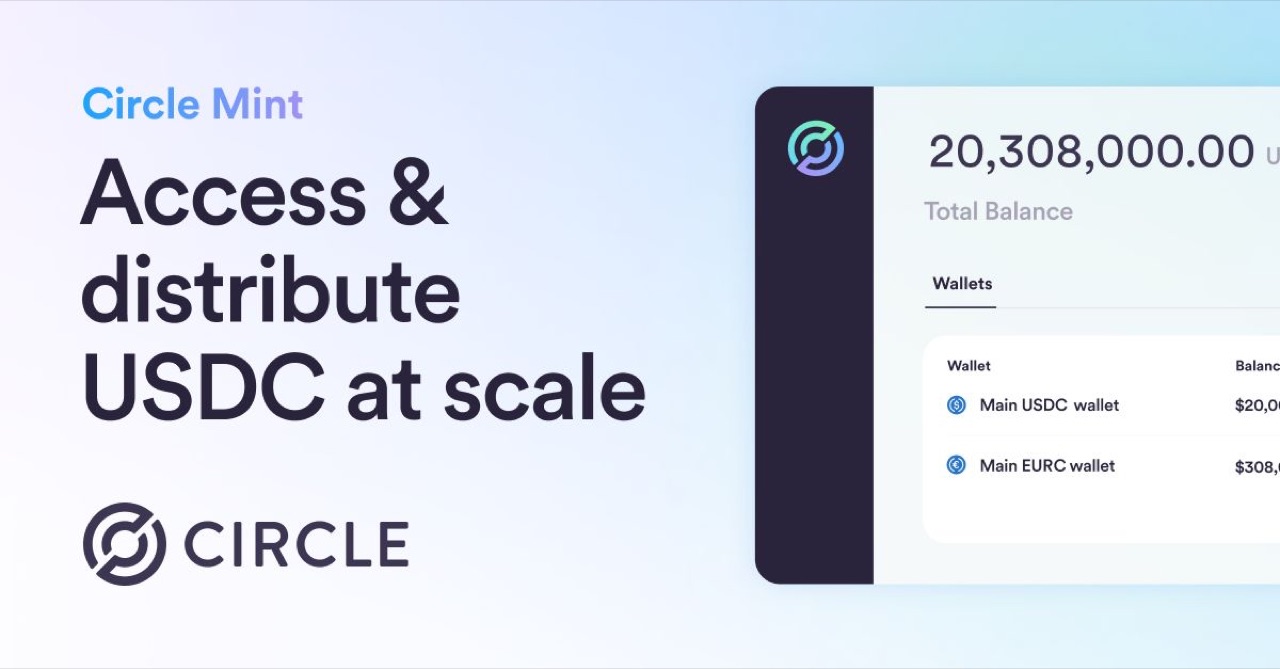
Circle Mint gives eligible businesses a route to minting and redeeming Circle’s stablecoins. That is a different role from a general payment application and an important distinction for buyers.
Circle ranks second because a builder must understand the asset and its access arrangements even when another provider handles the application integration. The existence of a stablecoin does not establish that every customer can redeem it directly through the issuer on the same terms.
Ask who in the proposed transaction has an account relationship with whom. Ask which steps occur through the issuer, an intermediary, or a banking partner. A useful architecture diagram names those parties instead of representing the entire process as one arrow labeled “instant payment.”
For a business whose primary need is direct issuer access, Circle could be the first evaluation. For a team needing a broad end-user payment experience, issuer access may be only one component. The ranking should follow that difference rather than hide it.
3. Fireblocks: operational control is a separate purchase
Fireblocks’ payments offering addresses digital-asset payment infrastructure. It belongs on the shortlist when the organization needs to manage the operational side of asset movement and connected workflows.
Fireblocks ranks third for a small application builder because the team should first establish whether its product needs this level of infrastructure responsibility. A larger financial institution or an organization managing its own asset operations might begin here instead.
The key questions involve authority and execution. Who can initiate a transaction? Who approves it? How are permissions changed? What happens when the organization needs to suspend a flow or investigate an unexpected transfer?
A business should understand the control arrangement and the service boundaries before signing. Infrastructure software does not automatically assume every responsibility associated with the assets, the customer relationship, or the payment’s destination. Those obligations need to be explicit in the proposed operating model.
Do not rank a token, an API, and an operating system as one product
The order above is useful precisely because it is not a universal score. Bridge, Circle, and Fireblocks may participate in different layers of a proposed service. The buyer might use more than one, or select a different company after mapping the flow.
A misleading comparison treats every vendor as a complete replacement for every other one. It then assigns a single score for speed, security, and cost without specifying the customer, the transaction, or the responsibilities included.
GlobalRanking’s assessment is narrower: begin with the application flow, identify the asset and access path, then decide which operational controls the company needs to own. This sequence helps a builder ask better questions. It does not establish which company offers the lowest all-in price for an unspecified payment.
Make a pilot follow the money all the way through
Stablecoin infrastructure should be evaluated using an end-to-end flow that includes the recipient’s usable funds and the company’s records. A transaction appearing on a blockchain is one event in that flow, not proof that every commercial step is complete.
The pilot should include a delayed step, a rejected customer, a reconciliation mismatch, and a support request. Identify which company is responsible for each case and what the application can tell its user while the issue is unresolved.
Obtain a complete fee explanation and operating agreement before treating any estimated savings as a product advantage. The strongest provider for this builder will be the one whose responsibilities match the application and whose exceptions the team can manage. That is a more demanding test than whether the happy-path transfer looks fast.
Image: Circle