Best Smart Home Companies for a Mixed-Brand Household
Compare smart home companies for a mixed-brand household. Samsung, Apple, and Google assessed by compatibility checks, platform fit, and hub requirements.
The Matter badge can make a smart-home purchase look simpler than it is. A device may support the standard while the buyer’s chosen platform supports only some of its functions or requires additional hardware.
For a household beginning with multiple brands and no fixed platform preference, GlobalRanking’s first evaluation order is Samsung, Apple, and Google. This is a shortlist of consumer smart-home platform companies, not a ranking of every bulb, sensor, or appliance they connect.
The order emphasizes the process of verifying compatibility. It does not establish that one company offers the most reliable home, the strongest privacy, or the longest guaranteed support. Those claims need product-specific evidence that this desk review does not supply.
The household and the method
Evaluated September 29, 2026, the ranking covers three companies with publicly documented consumer platforms and Matter support. The assumed household wants shared control of mixed-brand devices and is still choosing its main platform.
We prioritize a clear compatibility-checking route, integration with the household’s existing devices, the clarity of hub requirements, and the ability to understand what functions are supported. The ranking is qualitative editorial judgment. GlobalRanking has not installed and tested the platforms in comparable homes or audited their privacy and security practices.
The order can change immediately when the household’s existing devices are specified. An all-Apple home may start with Apple. A household already using compatible Google hardware may start with Google. No paid placements or affiliate links were used, and product availability and support need verification in the buyer’s country.
1. Samsung: begin with the compatibility inventory
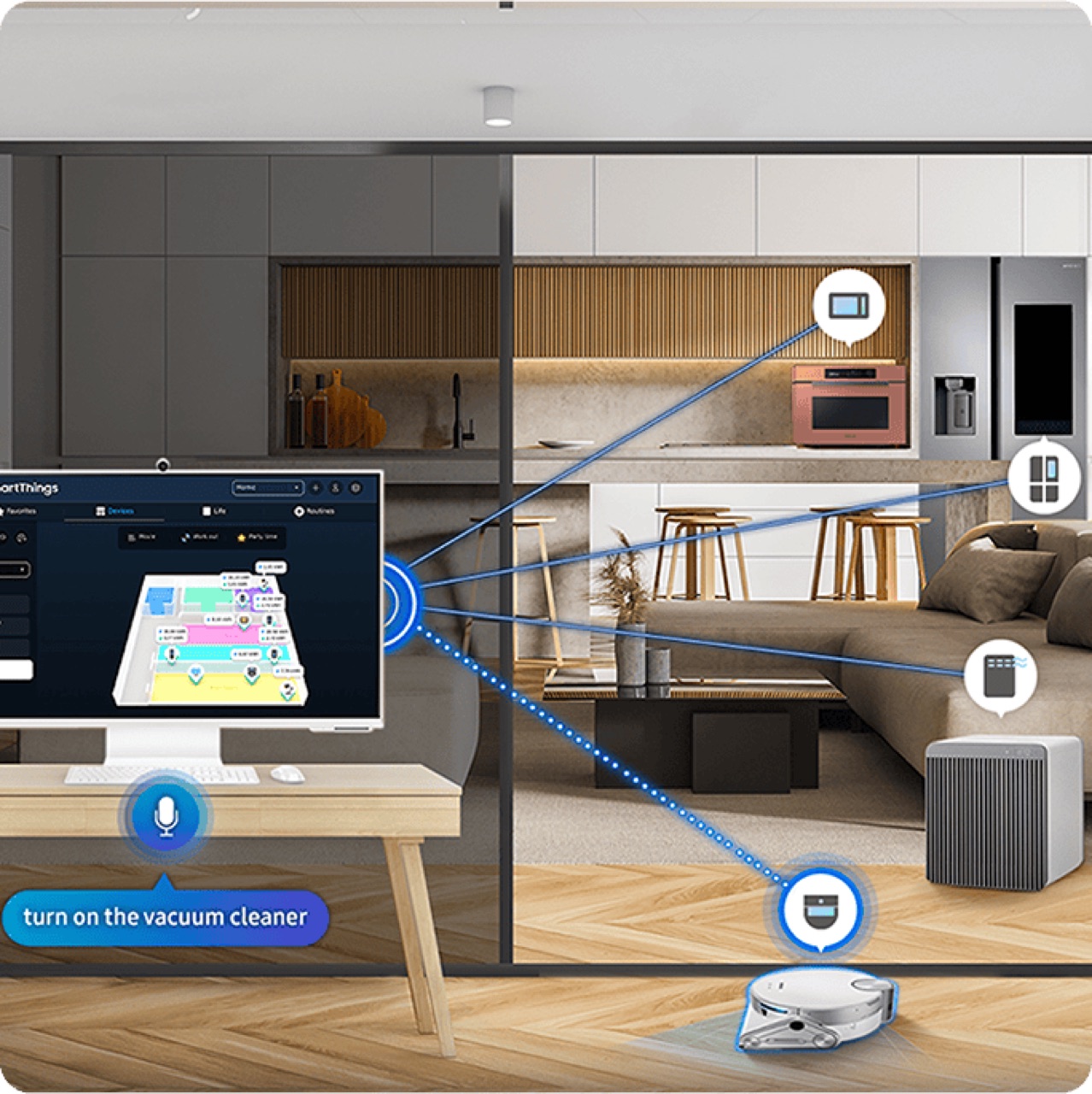
Samsung’s SmartThings compatibility guidance directs users to check supported devices. Its SmartThings materials also describe support across a range of devices and brands.
Samsung takes first place for this platform-neutral scenario because compatibility is the first problem the household needs to solve. That is an editorial evaluation of the buying process, not proof that every mixed-brand installation works better with SmartThings.
The buyer should create an inventory before choosing a hub or buying more devices. Include exact model names and the functions the household expects to use. A device being discoverable in an app is not enough if the needed automation or control is absent.
Samsung moves down the list if the household’s important devices or phone habits fit another platform more naturally. The correct first purchase is the one that avoids creating a second, unnecessary control arrangement for the same home.
2. Apple: a strong first check for Apple-centered homes
Apple’s Matter documentation describes adding Matter accessories to Apple Home and controlling them through its ecosystem. That gives an Apple-oriented household a practical starting point for evaluating mixed-brand accessories.
Apple ranks second in the platform-neutral scenario and could take first place when the people controlling the home already use its devices. Familiarity can matter: an automation is less useful if only one household member understands how to change or recover it.
The buyer still needs to check the specific accessory and required supporting hardware. A broad statement of Matter support should not become an assumption that every new device category or advanced feature is available.
For shared households, include more than one person in the evaluation. Check how access is granted, how ordinary controls are used, and what happens when the person who originally configured the system is unavailable. Convenience should belong to the household rather than one administrator.
3. Google: check the hub and device type first
Google’s Matter setup guidance explicitly notes that platforms support device types at different times and describes hub requirements for setup and control.
Google ranks third under the neutral starting assumption. It may be the natural first evaluation for a household whose existing speakers, displays, phones, and supported devices already fit its environment.
The guidance reinforces the central purchasing discipline: inspect the actual proposed arrangement. A platform’s support for Matter is not a blanket promise about every accessory carrying the badge.
Before expanding, test one representative device. Confirm the functions available to each household member and examine the platform’s current documentation. A successful basic on-off command should not be mistaken for proof that all desired automations or device-specific settings are exposed.
The goal is a coherent home, not the largest possible list of connected objects.
What this ranking does not cover
Device makers such as IKEA and Signify occupy a related but different purchasing category. IKEA’s Matter release information and Philips Hue’s Matter materials should be consulted for the relevant products and bridges.
They are not ranked here as direct substitutes for the three platform companies. A household may use their devices with its chosen controller. Combining platform companies and accessory brands into one unexplained score would make the comparison less useful.
The same care applies to open-source alternatives. A home seeking greater configurability and willing to maintain a different operating setup needs a separate evaluation. This ranking is bounded to mainstream company-operated consumer platforms.
The first test should include an ordinary failure
The best smart home companies for a mixed-brand household should help the household build a system it can understand. Test setup, shared control, a device going offline, and recovery after a restart before committing to a broad rollout.
Ask which functions depend on an account, a hub, local connectivity, or an external service. Read the support information for the actual device rather than assuming the platform’s reputation guarantees a lifespan.
A good platform choice can reduce unnecessary duplication. It cannot remove every dependency created by connected hardware. The useful outcome is a home whose owners know what works, what is required, and how they will handle the day something stops responding.
Image: Samsung