Vultr Places a $1.2 Billion Order for HPE’s AMD Helios Systems
HPE announces a $1.2 billion AMD Helios order from Vultr. The next evidence is delivered capacity, usable services and workload economics.
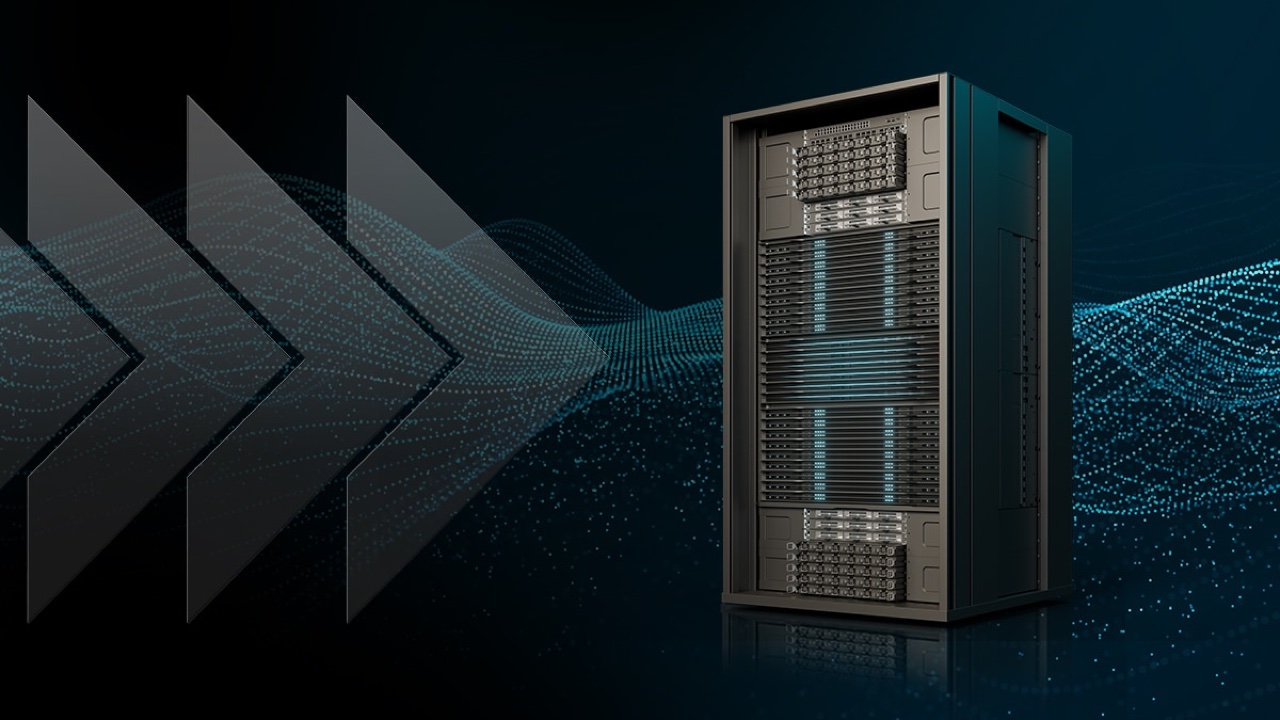
HPE announced a $1.2 billion order from cloud provider Vultr on September 30 to deploy AMD Helios AI Rack systems at Vultr's US data centres. The company release describes it as HPE's first order for the new system.
The order is concrete commercial evidence for the platform. It also needs to be read as an order, rather than a statement that all the capacity has already been installed or made available to customers. The announcement does not provide enough detail to calculate the number of racks or a customer-facing price from the headline value.
The system is larger than its accelerators
HPE says each rack combines 72 AMD Instinct MI455X GPUs with EPYC Venice CPUs, Pensando Vulcano networking and ROCm software. It also describes six HPE Juniper QFX5252 scale-up switch trays per rack and a design that incorporates liquid cooling and deployment services.
Those specifications and positioning come from HPE. GlobalTechRanks has not independently benchmarked the rack, verified delivered capacity or obtained the commercial terms of the Vultr order.
Our analysis is that the announcement should be evaluated as a system deployment. Buyers need compute, networking, power, cooling and software to work together. A strong individual component does not tell them how readily a production workload can move onto the complete platform or how reliably the provider can keep it running.
An order creates an execution test
For Vultr, the useful next milestones would be deployment dates, the regions and configurations customers can actually access, and the operational terms attached to that capacity. A developer deciding where to run a workload needs those details before an infrastructure announcement can become a purchasing option.
A practical comparison would use the same model, dataset and acceptable output quality across providers. It would include the work required to prepare the software, move data, monitor performance and recover from interruptions. Such an evaluation could reveal trade-offs that do not appear in a processor specification or a headline purchase value.
Those are suggested comparison criteria. This article does not establish a performance advantage over a competing platform, and the order itself is not evidence that every model will run with minimal adaptation.
What openness has to mean for a customer
HPE presents the rack as an architecture built around open standards. For prospective users, the practical question is which choices that preserves: compatible software, accessible operational tooling, the ability to move workloads and a clear path to diagnose problems.
The announcement makes HPE's AMD Helios business more tangible by naming a buyer and an order value. The next proof will be operational: systems delivered, services available and customers able to use them under terms that make sense for their workloads. Until those details emerge, the $1.2 billion figure measures commercial commitment, not completed computing capacity.
Image: AMD