GIGABYTE’s 64GB AI TOP ATOM Reaches Its Announced Launch Date
GIGABYTE’s 64GB AI TOP ATOM reaches its October 23 availability date. The DGX Spark-based desktop adds a memory option for local AI development.
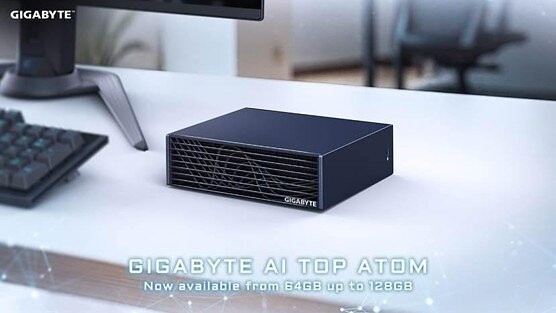
GIGABYTE’s 64GB unified-memory version of AI TOP ATOM reaches its announced availability date on October 23, adding another configuration to the company’s desktop AI lineup. The model sits alongside an existing 128GB option and is based on NVIDIA’s DGX Spark platform.
The timing needs a distinction: GIGABYTE announced the configuration on October 5. Today is its stated availability date, rather than the first disclosure of the product. The company says pricing, channels and availability can vary by region, so that date does not establish stock at every retailer.
GIGABYTE positions the system for on-premises AI development, including model exploration, assistants and applications using a user’s own documents. Those are intended use cases, rather than performance results from testing by GlobalTechRanks.
Choose memory around the workload
The practical question for a buyer is which work must fit on the machine. A headline memory capacity is useful information, but it is not enough to decide whether a particular model, context length and application can run comfortably together.
Before purchasing, a team should define the actual workflow it wants to move onto the desktop. That might be experimenting with a model, checking an application against private documents or preparing a demonstration. Each puts different demands on memory, response time and software compatibility.
A useful demonstration would run the intended model and supporting tools together, using a representative input. It should also show what happens when several requests arrive or the document set grows. These are proposed purchase checks, not benchmarks we have performed on either AI TOP ATOM configuration.
Local hardware changes the responsibilities
Keeping work on a local system can give a team more control over its environment. It also leaves that team responsible for access, software updates, backups and the handling of the information placed on the device. A machine sitting in an office does not automatically make every application private or secure.
The cost comparison should include those responsibilities and the expected pattern of use. A dedicated desktop may be attractive for recurring development work, while intermittent projects can create a different calculation. A lower-memory configuration should be assessed on whether it completes the required job, not just whether its purchase price is lower.
Today’s milestone adds a choice for developers considering a compact local AI system. The next useful evidence is regional pricing, obtainable stock and workload-specific results that let buyers decide which configuration fits their work.
Image: GIGABYTE