Best Enterprise AI Companies for a Practical Shortlist
Compare enterprise AI companies by integration, governance, and implementation fit. A practical shortlist of Microsoft, Google, Anthropic, and OpenAI.
An enterprise AI purchase can look like a model decision until the first employee asks why the assistant cannot see a document, why an agent changed the wrong record, or who approved the bill. The companies most useful to buyers are those that fit the work around the model.
GlobalRanking’s first enterprise AI ranking puts Microsoft, Google, Anthropic, and OpenAI on a practical shortlist. The order reflects the needs of a midsized organization introducing AI into existing business systems, with limited capacity to build a new operating environment. It does not declare a universal winner in model intelligence.
What this ranking measures
Evaluated September 29, 2026, this is a desk-researched editorial ranking of four vendors with publicly documented enterprise offerings. We prioritize integration with existing work, administrative control, implementation options, and the clarity of the buying path, in that order. We have not conducted a comparative deployment or performance benchmark, and no numerical scores are assigned.
The shortlist is intentionally bounded. It excludes specialist applications and open-model deployments assembled by the buyer. A research lab training models would need a different comparison. So would a small agency buying only a writing assistant.
Our order is an assessment of fit under these assumptions, not a measured security or productivity league table. Vendor documentation establishes what is offered; it does not establish how well every customer deployment performs. No paid placements or affiliate links were used in preparing this ranking.
1. Microsoft: start with the systems you already administer
Microsoft’s Agent 365 offering emphasizes centralized visibility and governance for agents. That makes Microsoft the first company to evaluate for organizations already deeply invested in its workplace and identity environment.
Its first place is conditional. Keeping AI within an existing administrative footprint can reduce the number of systems an IT team must learn. It can also make the vendor more difficult to leave. A familiar dashboard is useful, but it is not evidence that an integration has the correct permissions.
Before purchasing, ask Microsoft or its implementation partner to demonstrate one complete workflow using your permission model. Include an employee who should not see the underlying document. Include a revoked account. Include an action that requires approval. A polished answer from an unrestricted demonstration account proves little about those cases.
An organization with minimal Microsoft usage should not treat this position as a reason to rebuild its stack around the company.
2. Google: a strong candidate where data and cloud meet
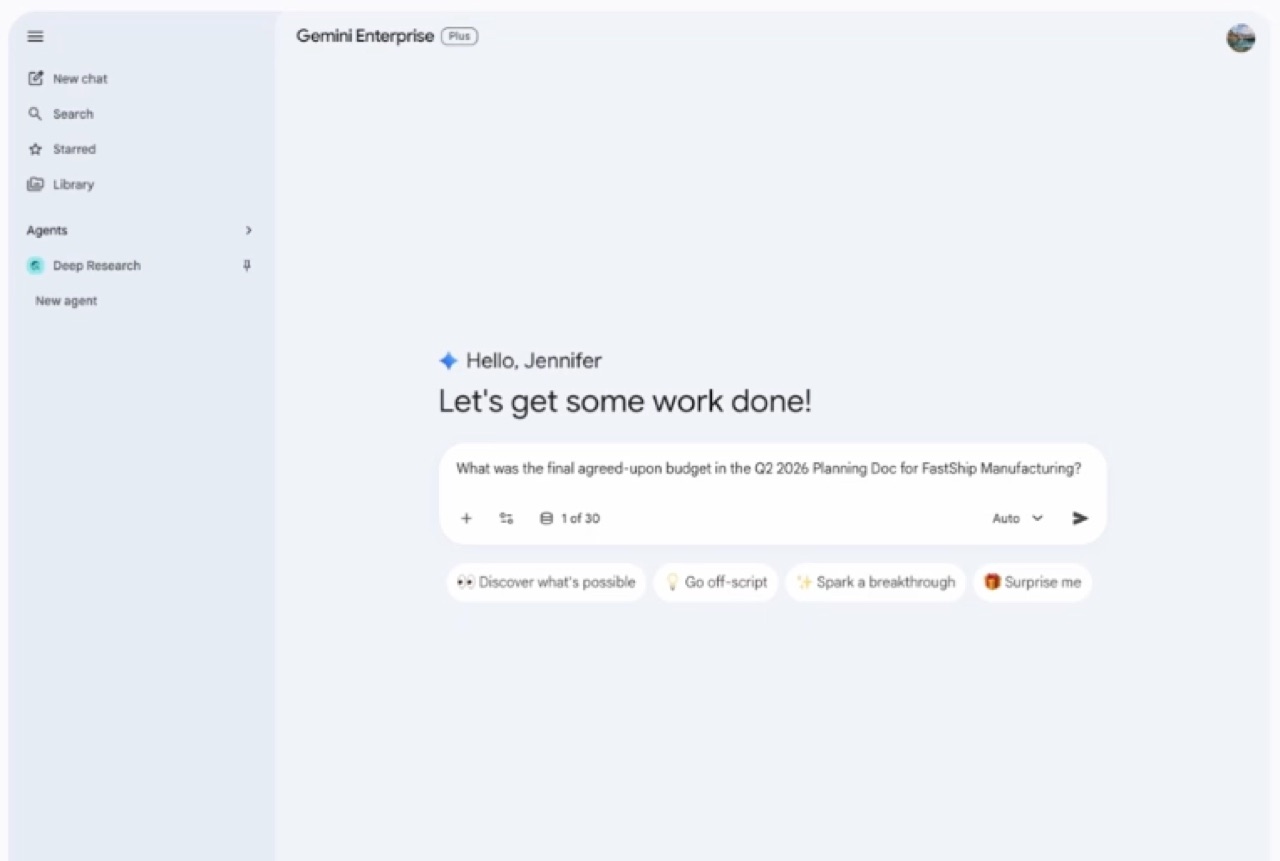
Google’s enterprise AI platform brings together models, enterprise search, and agent deployment. It is the second company on this shortlist because it presents a broad implementation route for organizations whose AI projects intersect with cloud data and applications.
That breadth needs careful purchasing discipline. A buyer may need a staff-facing assistant, a developer platform, or a custom application. Those are different decisions even when the same vendor supplies all three.
Google moves ahead of Microsoft for a company whose critical systems and engineering expertise already sit in Google’s environment. The meaningful comparison then becomes whether the proposed workflow can use those assets without duplicating permissions, storage, or operational monitoring.
Ask for a clear separation between included capabilities, usage charges, implementation services, and optional products. An attractive platform diagram should lead to a bill that finance can understand and an incident path that operations can follow.
3. Anthropic: evaluate the implementation, not just Claude
Anthropic’s May 2026 announcement of an enterprise AI services company explicitly addresses the hands-on work of adapting Claude to midsized organizations. That is a useful acknowledgment: operational adoption requires knowledge of how a business actually functions.
Anthropic ranks third for this buyer because its model-centered approach may require more explicit decisions about deployment partners and surrounding systems. That is not a criticism of model quality. It is a distinction between purchasing a capability and adopting an operating environment.
An organization with engineers and a sharply defined workflow could reasonably put Anthropic first. The buyer should evaluate the actual delivery team, maintenance obligations, and integration ownership alongside Claude’s outputs.
Do not accept an impressive prototype as a maintenance plan. Someone must keep connectors current, update evaluations, and explain what happens when upstream applications change their APIs.
4. OpenAI: a direct route that still needs operational scrutiny
OpenAI’s enterprise adoption research describes the expansion of agentic work across its customer base. It supplies a useful reporting window into usage, although it represents OpenAI customers rather than the entire enterprise market.
For this ranking, OpenAI is the fourth company to evaluate, not the fourth-best model builder. Organizations seeking a direct assistant experience or a custom application built around its services may place it much higher.
The purchasing question is whether the offering fits the proposed workflow and its controls. A growing volume of agent activity does not tell a buyer whether its own tasks will be completed correctly, economically, or with the right approvals.
Ask for a pilot that measures accepted work rather than generated output. Count corrections, abandoned tasks, and staff review time. If an assistant produces twice as many drafts but requires twice as much review, activity has increased without establishing a business benefit.
Let the workflow change the order
The best enterprise AI companies for a practical shortlist are not necessarily the best for every department. Procurement should name a workflow, its owner, its failure modes, and its success criteria before discussing model rankings.
A legal drafting project, a customer-service assistant, and a software maintenance agent need different tests. The order above should change when the buyer’s existing systems or implementation capacity change.
The next step is a bounded pilot involving representative users and difficult examples. Choose the company that can demonstrate a repeatable, supportable result in that setting. A model leaderboard is an input to the decision. It cannot finish the procurement process.
Image: Google