Who Reviews the Code When Agents Write Pull Requests?
Coding agent review determines whether generated changes become useful software. Examine tests, task context, accountability, and the full acceptance cycle.
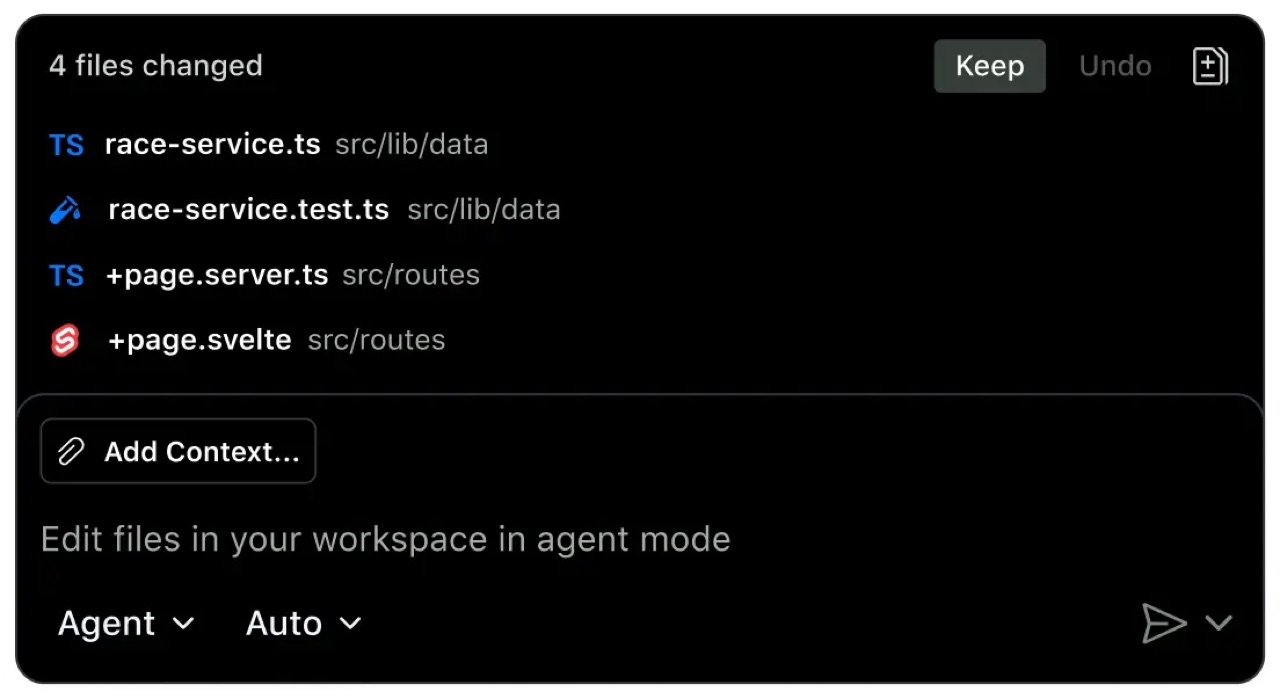
GitHub’s public AI offering now describes agents working across editor, command-line, and repository workflows. GitLab documents its own agent platform, while editor-centered tools such as Cursor bring agent work into active development. The purchasing pitch is increasingly about completing tasks, not merely suggesting the next line of code.
The responsibility for accepting the result has not disappeared.
A software team needs to know who checks whether an agent’s change solves the requested problem, preserves existing behavior, and can be maintained. That question becomes more important when producing a plausible patch gets easier.
A pull request is a proposal
GitHub’s Copilot page describes ways to assign and manage agent-assisted work. The presence of a completed change in a familiar workflow can make it feel close to ready. It is still a proposal that must meet the repository’s standards.
A reviewer has to understand the original task as well as the patch. An agent might resolve the visible symptom while missing the underlying cause. It might introduce a dependency to avoid a small piece of code. It might change a test so that a regression no longer fails.
These are possible failure modes, not findings about every agent-created change. Human-authored work can have the same problems. The difference is that a team may be able to generate more proposals than its existing review capacity can comfortably evaluate.
If the team measures only how quickly a patch appears, it can miss the work transferred to the person accepting it.
Passing tests is evidence with a boundary
Automated checks are essential, but their meaning depends on what they test. A suite can show that known expectations still hold. It cannot establish that every relevant expectation was included.
The reviewer should examine test changes alongside production code. Does the new test reproduce the reported issue? Does it verify the behavior users need? Was a failing expectation weakened to accommodate the implementation?
An agent can help write meaningful tests. The team still needs a method for deciding whether they are meaningful. A large volume of tests that restate the implementation may increase maintenance without improving confidence.
Ask the agent or developer to explain the failure before the fix and the behavior after it. That explanation should point to an observable outcome. “All tests pass” is useful validation, but it is incomplete when nobody can explain why the changed test matters.
Task context can improve a patch or misdirect it
GitLab’s agent documentation and Atlassian’s Rovo Dev offering illustrate how agent work is moving closer to the surrounding development process. A task may include discussion history, an issue description, or information from collaboration tools.
That context can prevent an agent from guessing. It can also contain obsolete decisions, contradictory requirements, and instructions written for a different situation.
A reviewer should know which acceptance criteria governed the change. A useful pull request names them rather than requiring the reviewer to reconstruct a long conversation.
For a hypothetical payment settings bug, the task might say to preserve existing customers’ configuration while changing the default for new customers. A patch that changes the global default may look reasonable until the reviewer compares it with that distinction. The important failure would be misunderstanding the scope, not writing invalid syntax.
Keep the patch small enough to explain
An agent can explore several solutions and produce broad edits quickly. Speed does not make those edits easy to assess.
A team should ask for changes organized around a clear behavior. If the task is a bug fix, an unrelated refactor should earn its place through necessity rather than proximity. A reviewer should not need to accept a new architecture to resolve a small defect.
Cursor’s agent security documentation supplies one place to examine the boundaries around agent actions. Whatever tool the team uses, it should understand what actions require approval and what changes it needs to inspect afterward.
The same principle applies to dependencies and external commands. A task that can be solved inside the existing codebase should not quietly become a broad environment change without a reason. Review should cover the operational effects of the work, not just the visible source diff.
Accountability should remain legible
An agent is not a substitute for an accountable owner. The team should assign someone to verify that the requested behavior is satisfied and that the evidence is sufficient for the change’s impact.
That does not require every patch to receive the same process. A spelling correction and a billing calculation deserve different levels of scrutiny. The point is to keep the decision proportional and explicit.
For a pilot, measure the complete cycle: task preparation, agent execution, developer corrections, review, and acceptance. Include the maintenance cost of failed approaches when assessing time saved. Otherwise, a tool can appear productive because the evaluation stops before the difficult work begins.
There is a plausible benefit here. Agents can help prepare focused patches, find related code, and exercise existing checks. They can also free developers from repetitive work. Those benefits need evidence from the actual team’s workflow rather than a general promise.
The useful question is not whether an agent can write a pull request. It is whether the team can accept more correct changes with less total effort. Until that is measured, the reviewer remains the place where the productivity claim meets the product.
Image: GitHub