AI Hardware’s Bottlenecks Extend Beyond the Processor
AI hardware bottlenecks extend beyond processors. Examine memory, packaging, software, and operating constraints before accepting a system performance claim.
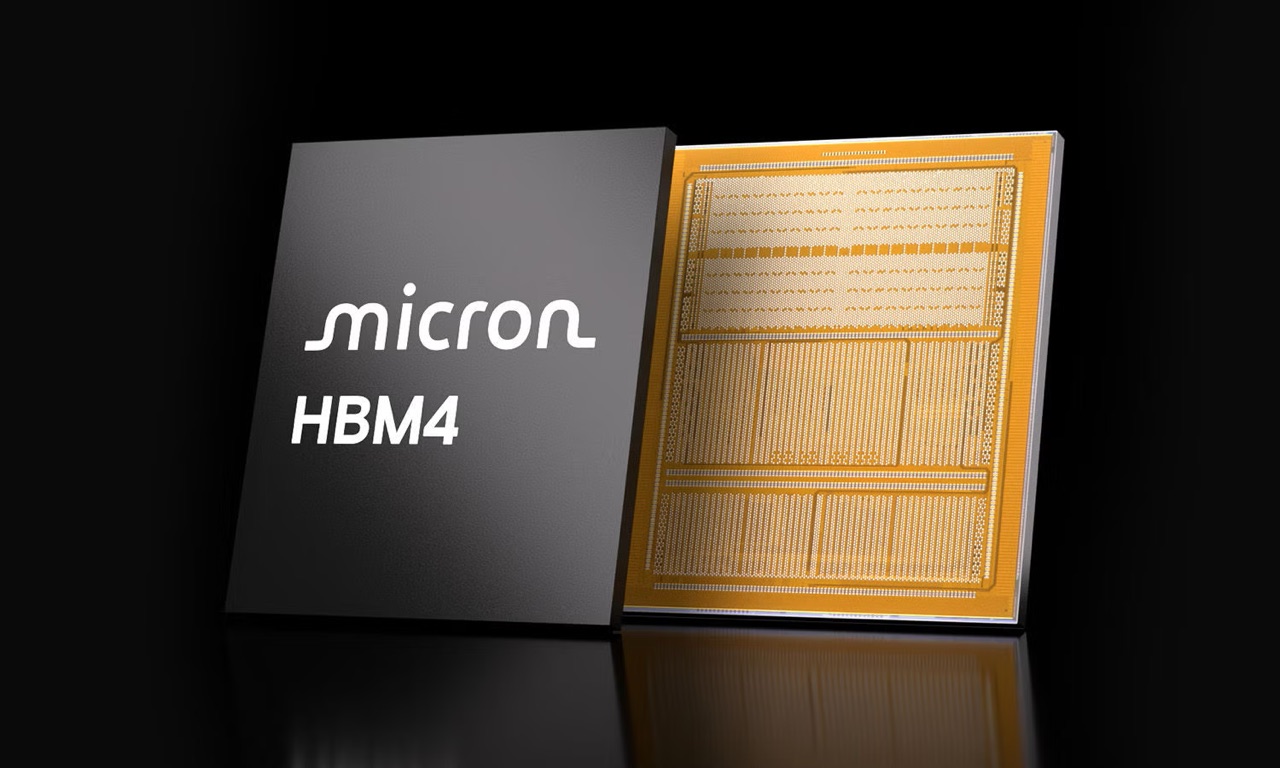
Micron’s March 16, 2026 announcement confirms high-volume HBM4 production, while its product documentation emphasizes memory bandwidth. TSMC’s advanced packaging materials describe ways to integrate chips into high-performance systems. Together, those offerings point to an AI hardware story that cannot be explained by processor design alone.
A powerful accelerator still needs to move data, connect to other components, and operate inside a usable system. The next constraint for a particular deployment may sit outside the compute engine that dominates the product launch.
For technology buyers and readers following the chip industry, that means separating evidence about an individual component from evidence about a complete service.
Memory is part of the architecture
Micron’s HBM4 documentation describes increased bandwidth and capacity configurations for demanding workloads. Those are vendor product specifications, not an independent measurement of every application’s performance.
The practical point is that memory characteristics can limit what a deployment can run and how it runs it. A model’s size, runtime state, and request pattern all belong in the planning process.
A hypothetical service using longer inputs may require a different operating configuration from the same model serving short prompts. The application can consume more memory without changing the name printed on the accelerator.
Buyers should ask whether a performance comparison holds those conditions constant. If a vendor changes the input length, batching, or precision between results, the difference needs to be explained. A specification sheet cannot establish the effect on an unspecified workload.
The relevant question is not whether more memory is desirable in the abstract. It is whether the proposed system has the memory capacity and behavior required by the application at its intended service level.
Packaging connects the components
TSMC’s 3DFabric materials describe silicon stacking and advanced packaging approaches, including CoWoS, SoIC, and InFO. These technologies address integration, showing why the chip-industry discussion extends beyond the fabrication of one processor die.
The article does not establish that any one packaging technology is the current limiting factor for all AI hardware. Capacity constraints need evidence from the relevant manufacturer, product, and period.
It does establish a more useful reporting question: which steps must be available for the advertised system to become a delivered product? Design, fabrication, memory supply, packaging, and system integration can be distinct parts of that path.
A company announcing a future accelerator has not necessarily demonstrated that all those steps will support its proposed delivery volume. Readers should distinguish a product specification, a production plan, and completed shipment evidence.
The distinctions are particularly important when evaluating “hottest” semiconductor companies. Momentum can reflect an ambitious design or announced partnership. Delivery evidence requires a separate assessment.
Inference performance is a system result
NVIDIA’s TensorRT materials describe software for optimizing inference. AWS’s Inferentia documentation also connects hardware to a software deployment path.
These examples show why a hardware comparison needs to describe the runtime as well as the processor. Software can affect how work is scheduled, how resources are used, and which model operations are supported.
A buyer comparing two systems should establish the complete configuration. The same nominal model may be deployed with different precision, optimization, or batching choices. Those choices can affect quality as well as speed.
This does not mean hardware specifications are unhelpful. They help explain what a system might support and why one configuration behaves differently from another. They are inputs to a workload evaluation, not replacements for it.
For a commercial service, the useful result is a cost and response-time profile under acceptable quality. An isolated peak compute claim does not provide that profile.
Power and the operating site also need evidence
Every deployed system must fit the operating environment. Buyers should obtain the power, cooling, networking, and support requirements for the actual proposed installation.
Those requirements cannot be inferred safely from a single chip’s marketing specifications. A complete system contains additional components, and the way it is operated can change the relevant consumption and performance measures.
MLCommons’ inference benchmark documentation distinguishes its benchmark conditions and measurement rules. That is a useful model for reading performance claims: check what was measured, what was not, and whether the conditions resemble the application.
A site limitation can also change procurement. A system that looks attractive in a technical comparison may require an operating arrangement the buyer cannot provide. The company should resolve that before making a large commitment, rather than discover it after the hardware decision is treated as final.
Follow the constraint, not the launch slogan
For a model developer, a hardware shortlist should begin with the workload. For a reader tracking semiconductor companies, a reporting shortlist should begin with the evidence for delivered capability and the dependencies needed to sustain it.
Ask a chip company what stage the product has reached. Ask a system provider which components and operating conditions support the claimed result. Ask a buyer which bottleneck remains after the proposed upgrade.
There is no reason to assume that the same bottleneck applies to every training cluster, inference service, or device. One deployment may be constrained by memory capacity, another by coordination, another by the economics of serving sporadic traffic.
Micron and TSMC supply concrete examples of important work outside processor design. The wider lesson is analytical: an AI hardware story is incomplete until it explains the system around the chip and the evidence that the system can do useful work under real constraints.
Image: Micron