Best AI Chip Companies to Evaluate for Model Inference
Compare AI chip companies for model inference. NVIDIA, AMD, AWS, and Google assessed by software path and deployment fit, without unsupported speed rankings.
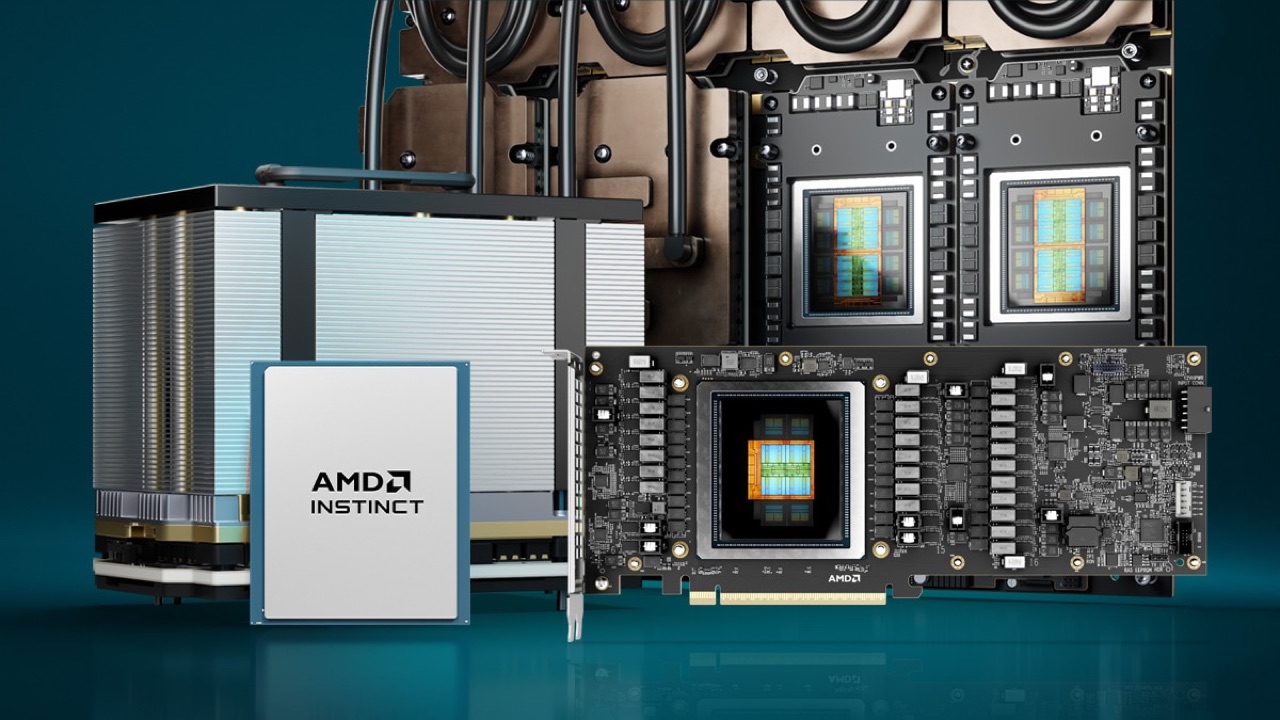
Buying inference capacity is not the same as buying the accelerator with the largest advertised compute number. A model must fit, the software must support it, and the resulting service must meet a cost and response-time target.
GlobalRanking’s first evaluation order for a team deploying a custom model is NVIDIA, AMD, Amazon Web Services, and Google. The ranking favors flexibility and a practical software path before specialized cloud integration. It is a shortlist of companies and platforms to investigate, not a measured comparison of individual chips.
A team already operating its workload on AWS or Google Cloud may reasonably put that provider first. The best AI chip companies for inference are conditional on the model and the operating environment.
The method and the missing measurements
Evaluated September 29, 2026, this qualitative ranking covers four companies with documented inference hardware or software platforms. The assumed buyer is an engineering team with a custom model, uncertain future requirements, and an interest in comparing more than one deployment route.
We prioritize a documented software path, flexibility across possible workloads, fit with existing infrastructure, and the ability to evaluate total deployment economics. We do not assign scores. GlobalRanking has not run a common benchmark, verified power consumption, obtained comparable quotes, or tested current capacity.
The order is editorial judgment based on those priorities. It should not be read as proof of superior speed, efficiency, reliability, or return on investment. No paid placement or affiliate links were used. A firm selecting a single well-understood workload at scale should conduct a much more specific comparison.
1. NVIDIA: begin with the software route
NVIDIA’s TensorRT documentation describes its inference optimization and runtime ecosystem. That software path is a central reason to place NVIDIA first on a flexibility-oriented evaluation list.
The ranking does not establish that an NVIDIA deployment will be cheapest. It reflects the value of beginning with a documented route to optimizing and running inference, especially while a team is still learning how its model behaves in production.
The buyer should identify the precise accelerator, runtime, and configuration being proposed. A familiar vendor name does not settle whether the model fits the available memory or whether the service meets its latency target.
The team should also distinguish the work it can reuse from the work tied to a particular environment. A smooth first deployment is useful; the ability to maintain it and adapt to changed requirements is part of the purchase.
2. AMD: compare a real alternative, not an assumed discount
AMD’s Instinct offering gives buyers another accelerator platform to evaluate. Its inclusion should prompt an actual workload comparison rather than an assumption that an alternative vendor automatically means lower cost.
AMD ranks second because a flexibility-oriented buyer benefits from testing a distinct GPU software and hardware route before committing its deployment strategy. That is an argument for evaluation, not a benchmark result.
Ask whether the intended model and required operators are supported in the proposed environment. Include the engineering time needed to adapt, tune, and maintain the deployment. A favorable infrastructure quote can lose its advantage if the team incurs substantial additional work.
The opposite can also be true: once the workload fits and the process is repeatable, a different platform may be commercially attractive. The pilot should be designed to discover that outcome without assuming it in advance.
3. AWS: an inference platform inside a cloud relationship
AWS documents Inferentia and the Neuron software route for running inference workloads. Its product claims are tied to particular comparisons and conditions; they should not be generalized into a promise for every model.
AWS ranks third in our vendor-neutral starting scenario. It could rank first for a team whose application, data, identity, and operating expertise already sit in AWS.
The buyer should evaluate the complete deployment rather than comparing a cloud service with a bare accelerator price. Existing monitoring and application integration may reduce work. Platform-specific adaptation may add it. Both belong in the analysis.
Ask for a supported configuration and a representative test of the actual model. Confirm how the proposed setup changes when inputs become longer, demand rises, or a new model version arrives. A successful example application is not evidence that every custom workload will behave similarly.
4. Google: consider TPUs where the workload fits
Google’s Cloud TPU documentation explains the platform and its deployment environment. It deserves consideration as a distinct route for teams prepared to evaluate how their workload fits that system.
Google ranks fourth under an initial-flexibility assumption, not because GlobalRanking has measured it as slower or less efficient. A team with relevant experience and existing Google Cloud infrastructure might begin here.
The evaluation should include the software changes and operating practices needed to run the intended model. Ask which configurations are supported and how the team will investigate performance or correctness problems.
Specialized architecture can be attractive when the workload aligns with it. The business needs evidence of that alignment. A generalized statement about purpose-built hardware does not replace a test of the service the customer plans to sell.
Compare systems under the same constraints
MLCommons’ inference benchmark materials emphasize defined workloads, scenarios, and rules. Those conditions are what make a benchmark result interpretable. A buyer should retain that discipline when conducting its own smaller evaluation.
Fix the model, acceptable output quality, input pattern, and response-time requirement. Then measure cost and performance for the complete service. Disclose configuration differences instead of compressing them into a universal chip ranking.
A purchasing decision can also include availability, support, and migration costs. Those factors may outweigh a narrow performance advantage, especially for a small team.
The winner is the platform that meets the workload’s requirements at an acceptable total cost and can be operated reliably by the buyer. That is a claim the company can test. “Best AI chip” without those conditions is mostly a headline.
Image: AMD