AMD Adds Embedded X100 Processors for Physical AI Systems
AMD announced Ryzen AI Embedded X100 Series processors on July 23, 2026, extending its embedded lineup for robotics, industrial automation and other systems that combine computation with activity in the physical world.
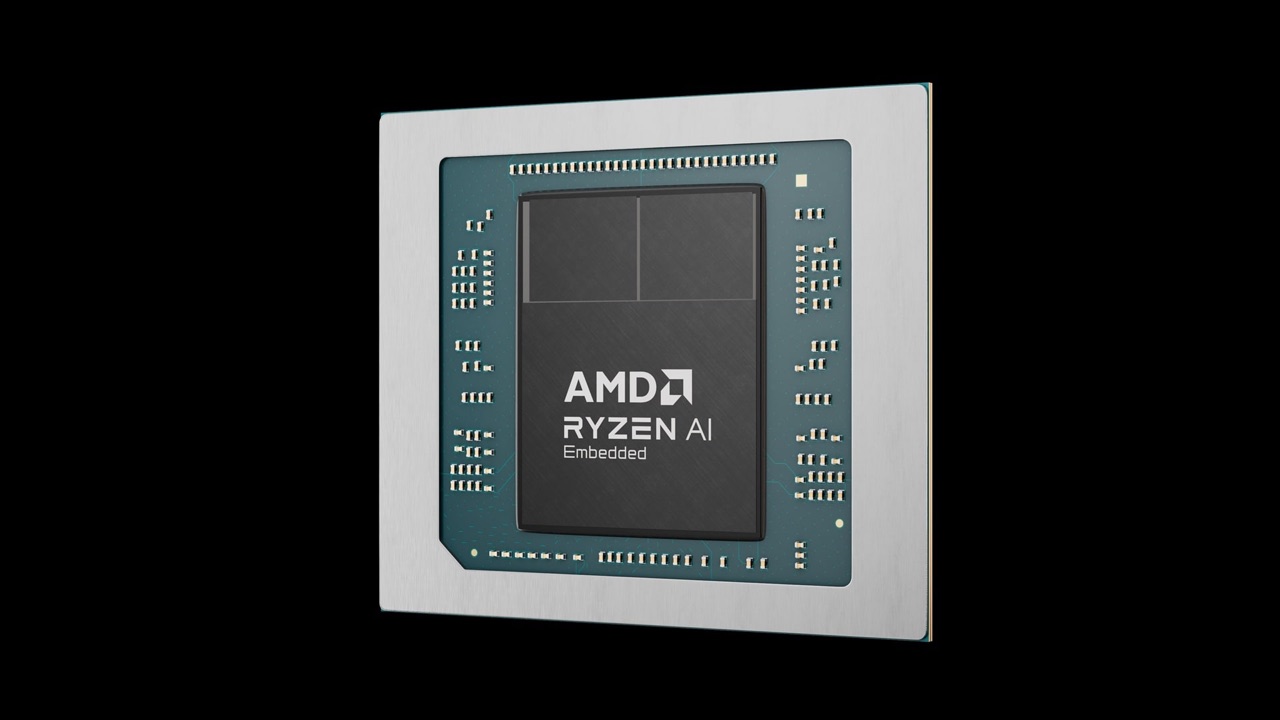
AMD announced Ryzen AI Embedded X100 Series processors on July 23, 2026, extending its embedded lineup for robotics, industrial automation and other systems that combine computation with activity in the physical world.
The release describes CPU, GPU and NPU resources in a unified-memory architecture. AMD said customer sampling had begun in June and production availability was expected in the fourth quarter of 2026. The announcement should therefore be read as a product introduction with a stated production timetable.
Different parts of a robot need different work
A physical system may have to interpret sensor information, plan an operation and maintain a control loop. Those jobs do not necessarily belong on the same kind of processor. The attraction of a heterogeneous design is the ability to assign work to an appropriate resource within a coordinated system.
That architecture does not establish the reliability of the finished machine. A robot's behavior also depends on sensors, software, mechanical components and the environment where it operates. The processor is one part of a larger engineering decision.
GlobalRanking's assessment is that developers should evaluate the complete loop between observation and action. A model that produces a useful interpretation too late may not help the system perform the task. Timing should be measured under the conditions that matter to the machine, rather than only in an isolated demonstration.
Physical constraints make comparisons harder
A system installed in a compact enclosure has limited space and heat dissipation. A mobile machine may also have a restricted energy budget. Those constraints can change which configuration is practical, even when another configuration has a higher peak performance figure.
The relevant comparison includes sustained operation, not just a short burst. It should account for what happens when several workloads run together and when the environment changes. A result from an unconstrained development setup can be useful without representing the deployed product.
Developers also need a clear path from a sample platform to the production hardware. Software support, board integration and component availability can influence that transition. A promising prototype is not automatically a repeatable manufacturing plan.
Compute capability is not a safety claim
The announcement expands AMD's role in physical AI compute. It does not certify a customer's finished robot or establish that the machine can operate safely around people. Those conclusions require system-specific engineering and evidence.
A buyer evaluating a robotics supplier should therefore distinguish the compute platform from the controls governing movement, access and recovery. More processing capability may enable useful functions, while leaving the responsibility for safe operation where it already belongs.
Ryzen AI Embedded X100 gives system designers another platform to assess. The decisive evidence will be how it fits their timing, thermal, software and production requirements, with the announced availability schedule treated as a plan to verify rather than a completed deployment.
Image: AMD